 Tiny Hearts CPR
When should parents take an infant CPR class?
The two windows when parents actually book, and why waiting until the baby arrives almost never works.

Most childbirth educators and hospital programs point to having infant CPR done by around the 36th week of pregnancy. The second common window is about four months after birth, when solid food is being introduced and choking becomes a live worry. Either works. What rarely works is planning to do it once the baby is here, because the first weeks do not leave room for it.
Why 36 weeks and not later?
Two reasons, and neither is about the baby. The first is simply that babies do not read calendars. A class booked for 39 weeks is a class you might miss. The second is attention. Learning a physical skill takes focus, and the newborn period is the least focused stretch of most people's lives. You want this in your hands before you are running on broken sleep.
There is a practical bonus too. In the third trimester you can still get people in a room. Grandparents plan visits around due dates, siblings are around, the nanny has not started yet. Once the baby arrives, coordinating ten adults becomes a project.
What about parents whose baby is already here?
Book it anyway. The four month mark comes up constantly, and the reason is obvious once you have lived it. Solids start, the baby begins putting everything within reach into their mouth, and choking stops being abstract. If your baby is six months, a year, or three years old and nobody in the house has done this, the right time is now.
Who else should be in the room?
Everyone who is ever alone with your child. That is the part people underestimate. Statistically the adult present at a pediatric emergency is often not a parent. It is the grandparent doing Tuesdays, the babysitter on date night, the aunt watching the baby for twenty minutes at a family dinner.
This is exactly why Pam caps a CPR party at ten people rather than one or two. Ten is enough to cover a whole support circle in a single evening, and the price is for the group rather than per head.
Do we need certification, or just the skill?
For a family, the skill. The class most parents want is the AHA Family and Friends curriculum, which teaches infant and child CPR and choking relief without issuing a card. If someone in your house needs documentation for work, a school district or a licensing board, that is a different course. See which CPR certification you actually need, or go straight to Heartsaver or BLS.
How long does it stay with you?
Skills decay faster than certificates expire. Cards last two years, which is covered in how long CPR certification lasts, but the honest answer is that most people benefit from refreshing sooner. Families who host a party when the first baby arrives often host another when the second one does, and the second class always goes deeper because the basics are already there.
Reading this is not the same as training
This page exists so the information is in your head before you need it. It is not a substitute for putting your hands on a manikin with an instructor watching. Skills fade, and the difference between knowing the steps and being able to do them under adrenaline is practice. If you are in Indianapolis, book a class. If you are not, find an AHA or Red Cross class near you.
Sources: American Heart Association infant CPR resources, American Red Cross.
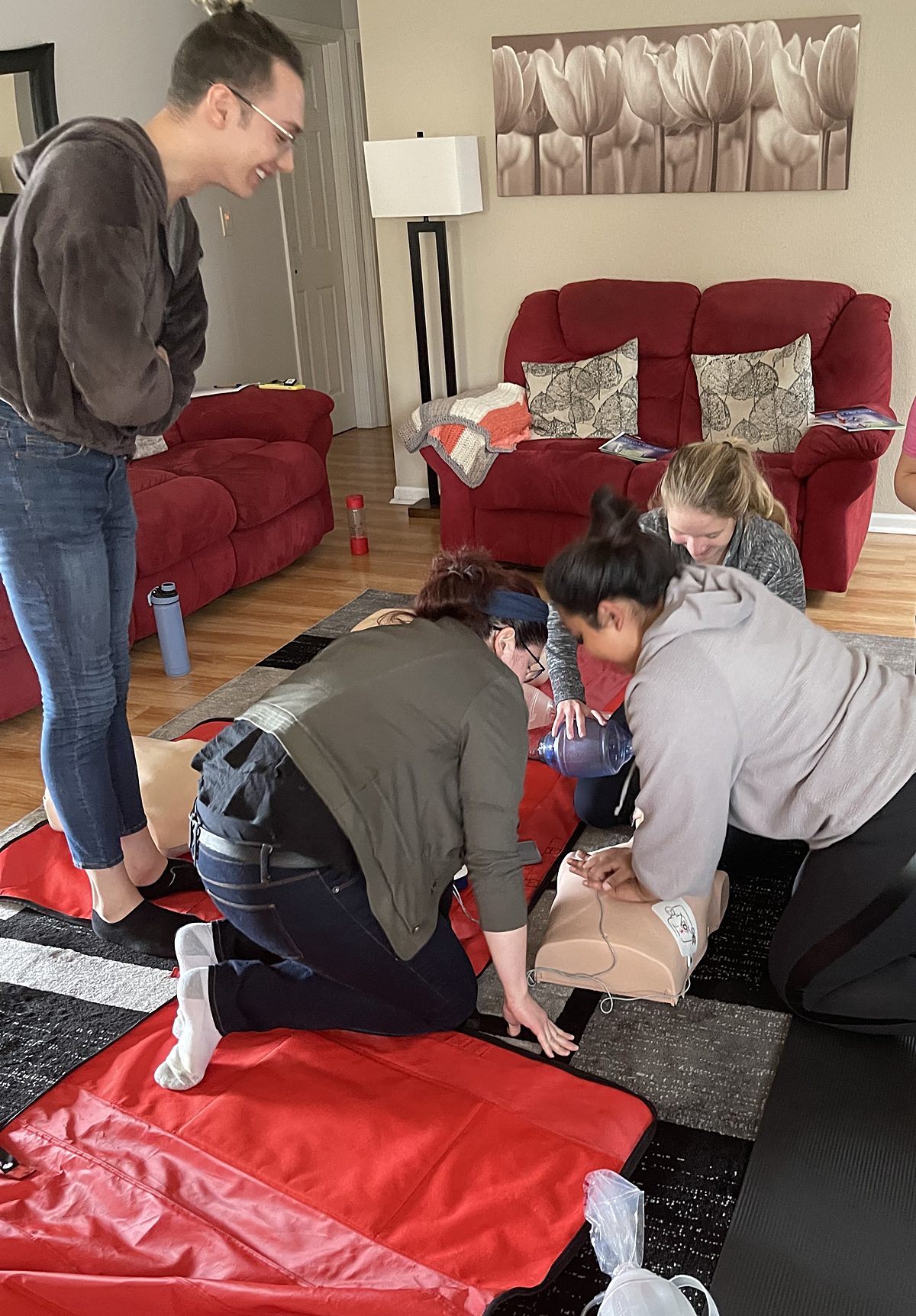
Reading gets the sequence into your head. It does not get it into your hands.
Every person in the room does every skill with their own hands, on a manikin, with a nurse watching and correcting. That correction is the part you cannot get from a page.
Timing questions
What week of pregnancy should we take an infant CPR class?
Aim to have it done by around 36 weeks. That gives you a buffer if the baby comes early and it means you are not trying to schedule a class in the newborn fog. Plenty of families book earlier in the third trimester so grandparents can plan travel around it.
Is it too late if the baby is already here?
No. Around four months is the second most common time people book, usually because solids are about to start and choking suddenly feels real. Any time is better than never.
Does my partner need to be there?
Yes, and so does anyone else who will be alone with the baby. The person who ends up doing CPR is very often not the mother.
The next thing worth knowing.
Infant CPR depth, rate, and what changed in 2025
Read thisChokingWhat to do when a baby is choking
Read thisChoosingWhich CPR certification do you actually need?
Read thisReading is not training. When you want the hands on version, Pam teaches it in your own living room. See CPR parties, or call or text Pam at 317-820-8003.