 Tiny Hearts CPR
Grandparents, and the technique that changed
The people most likely to be alone with the baby are often the ones whose training is oldest, and nobody has told them what moved.
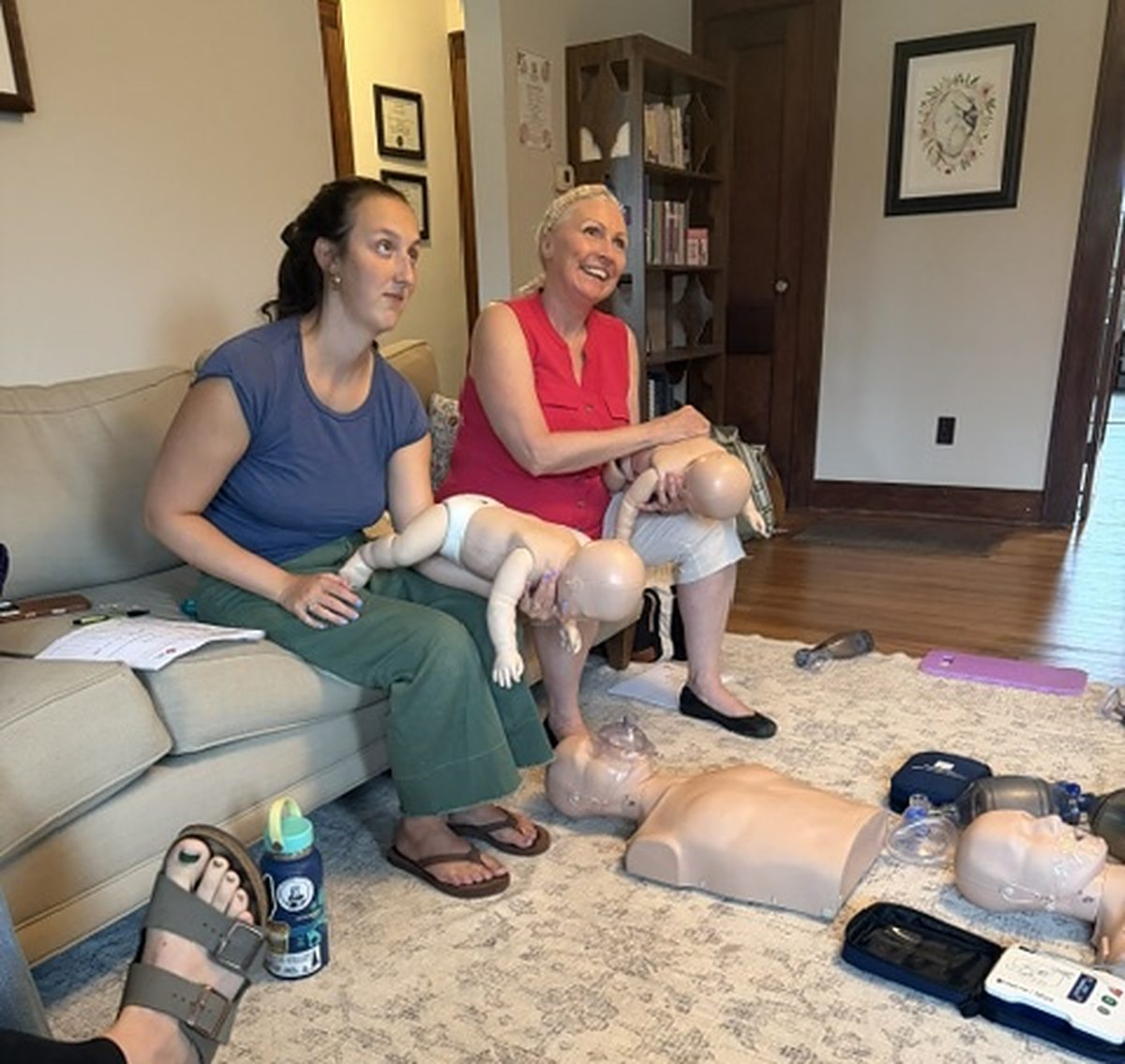
If you were trained in infant CPR more than a few years ago, you almost certainly learned to compress a baby's chest with two fingers. The 2025 guidelines from the American Heart Association and the American Academy of Pediatrics moved away from that, toward the two thumb encircling hands technique or the heel of one hand. The rest of the sequence will feel familiar. The hand position is the part worth updating, and most people who learned the old way have no idea anything changed.
Why this matters more for grandparents than anyone
Think about who is actually alone with a small child during a normal week. Parents, obviously. But also the grandparent who has them every Tuesday, or for a week in the summer, or every time the parents need an evening. That adult is statistically very likely to be the one present if something happens, and their training is usually the oldest in the family.
It is also the group least likely to be told. Nobody sends a notice when resuscitation guidance is revised. You find out because somebody mentions it, or you do not find out at all.
Two fingers reliably produce compressions that are too shallow, and they tire the rescuer out. That is why the guidance moved.
What changed for grandparents in 2025?
The hand position. If you learned infant CPR more than a couple of years ago you were taught two fingers on the breastbone, and the 2025 guidelines moved away from it. Your card can still be valid while your technique is out of date, which is the part nobody gets told.
Choking moved as well. Back blows now come first at every age, so for a grandchild over one it is five back blows and then five abdominal thrusts, where you were probably taught abdominal thrusts on their own. For a baby it stays five back blows and five chest thrusts, and abdominal thrusts are never used under one. See what to do when a baby is choking.
What specifically changed
The two finger technique is no longer the recommendation for infant compressions. Rescuers are directed to the two thumb encircling hands technique, where your hands wrap the baby's chest and both thumbs press the breastbone, or to the heel of one hand, chosen on the size of the rescuer relative to the baby. Depth stays at about 1.5 inches, roughly a third of the chest, at 100 to 120 compressions a minute with two breaths after every 30. Full detail in infant CPR depth and rate.
The strength worry, which is almost always misplaced
Older adults frequently say some version of I am not strong enough for this. It comes up in nearly every class with grandparents in the room, and it is nearly always about technique rather than strength. Depth comes from body position and leverage. Getting that right takes an instructor watching your hands for a few minutes, which is exactly the thing a video cannot do.
Why the class seats ten
Because the circle that actually holds the baby is bigger than two people. A CPR party is priced for the room rather than per head precisely so that grandparents, siblings, the babysitter and the nanny can all be there without anyone doing arithmetic about whether an extra person is worth it.
In practice the grandparents are often the most engaged people in the room. They have held more babies, they have seen more go wrong, and they take the correction seriously when it comes.
Reading this is not the same as training
This page exists so the information is in your head before you need it. It is not a substitute for putting your hands on a manikin with an instructor watching. Skills fade, and the difference between knowing the steps and being able to do them under adrenaline is practice. If you are in Indianapolis, book a class. If you are not, find an AHA or Red Cross class near you.
Sources: 2025 AHA and AAP Guidelines for CPR and Emergency Cardiovascular Care; American Heart Association; American Academy of Pediatrics.
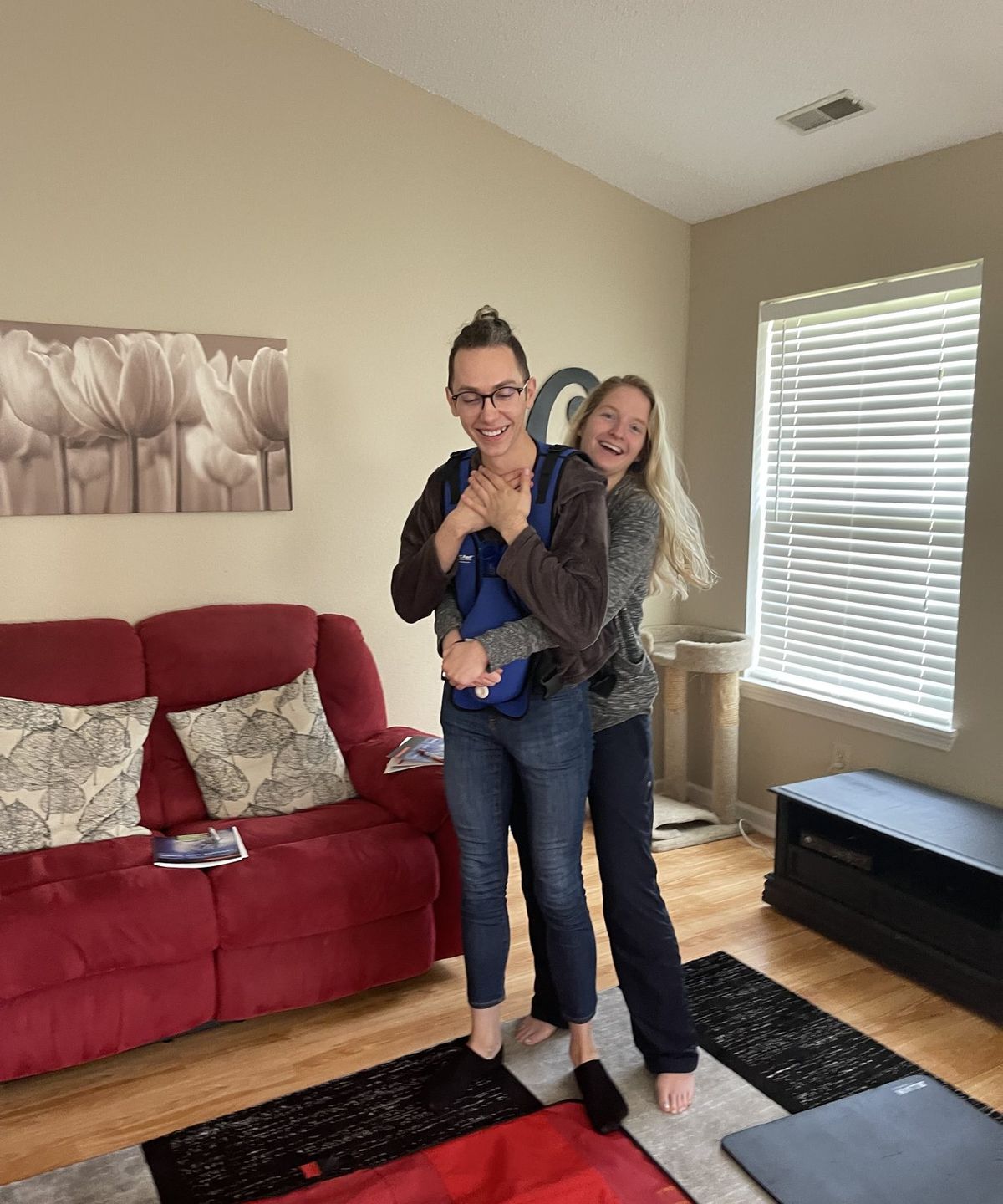
Reading gets the sequence into your head. It does not get it into your hands.
Every person in the room does every skill with their own hands, on a manikin, with a nurse watching and correcting. That correction is the part you cannot get from a page.
Refresher questions
My CPR training is from years ago. Is it still right?
The sequence is broadly familiar, but two things changed. Infant hand position moved away from the two finger technique toward the two thumb encircling hands technique or the heel of one hand. And choking now starts with back blows at every age, not just for babies. If you learned two fingers and abdominal thrusts on their own, those are the parts to update.
Do grandparents really need to take the class?
If you are ever alone with the child, yes. The adult present at a pediatric emergency is very often not the parent, and a seat costs nothing extra up to ten guests.
I am worried I am not strong enough.
Compression depth is about technique and body position, not strength. That is precisely the sort of thing an instructor corrects in person and a video cannot.
The next thing worth knowing.
When should parents take an infant CPR class?
Read thisRenewalsHow long does CPR certification last?
Read thisLegalCan you be sued for doing CPR in Indiana?
Read thisReading is not training. When you want the hands on version, Pam teaches it in your own living room. See CPR parties, or call or text Pam at 317-820-8003.