 Tiny Hearts CPR
Infant CPR depth, rate, and what changed in 2025
What the 2025 AHA and AAP update actually changed, including the technique most people were taught and should stop using.
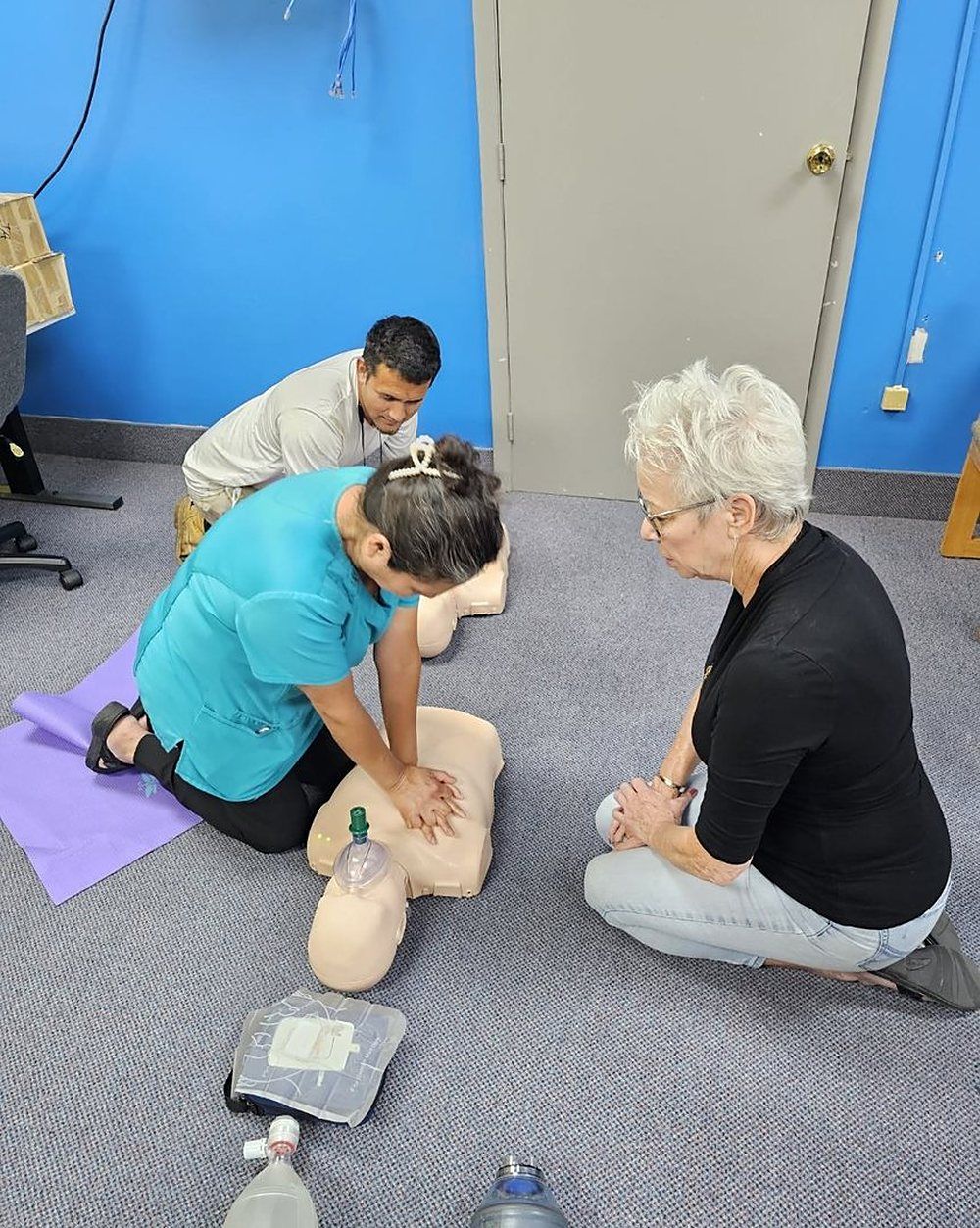
For an infant, compress about 1.5 inches deep, which is roughly one third of the chest, at a rate of 100 to 120 compressions per minute, giving two breaths after every 30 compressions when you are the only rescuer. The 2025 guidelines from the American Heart Association and the American Academy of Pediatrics also changed the hand position: the two finger technique is no longer recommended, and rescuers should use the two thumb encircling hands technique or the heel of one hand instead.
What exactly changed in the 2025 guidelines?
The headline for anyone who took a class more than a year ago is the technique change. Generations of parents were taught to compress an infant's chest with two fingers. The 2025 AHA and AAP Guidelines for CPR and Emergency Cardiovascular Care moved away from that, because two fingers reliably produce compressions that are too shallow and tire the rescuer quickly. The guidance now points to the two thumb encircling hands technique, where your hands wrap the baby's chest and both thumbs press the breastbone, or to the heel of a single hand, chosen based on the size of the rescuer relative to the baby.
Choking changed too, and it is the change nobody hears about. The 2025 update added guidance for choking in conscious adults for the first time, and rewrote it for children: five back blows followed by five abdominal thrusts, alternating until the object clears. The old advice for a child was abdominal thrusts only. Back blows now come first at every age, and abdominal thrusts are still never used on a baby. The full sequence is in what to do when a baby is choking.
The update also widened the recommended ventilation rate for newborns to 30 to 60 inflations per minute, expanded from the previous 40 to 60, as reported by the American Heart Association and the American Academy of Pediatrics.
If you were trained before 2025
Your card may still be valid. Your technique may be out of date. Those are two different things, and a refresher is worth booking even if your certification has not expired. See how long CPR certification lasts.
Why is depth the thing people get wrong?
Because 1.5 inches on a body that small feels violent. Almost everyone's instinct is to be gentle, and gentle compressions move no blood. This is the moment in every class where somebody asks what happens if they break something, and the answer does not change: a child who is not breathing and has no pulse is already in the worst case. Injuries heal. Doing nothing is the only outcome that cannot be reversed.
It is also why hands on practice matters more here than anywhere else. You cannot calibrate 1.5 inches from a diagram. You calibrate it by pushing on a manikin that clicks when you get there, twenty or thirty times, until your hands know it without your brain.
What is the sequence?
- Check for a response and get helpTap the baby's foot and shout. If there is no normal breathing, send someone to call 911 and get an AED. If you are alone, put the phone on speaker.
- Start compressionsTwo thumbs encircling the chest, or the heel of one hand. Just below the nipple line, on the breastbone. About 1.5 inches, 100 to 120 per minute, letting the chest come all the way back up between each one.
- Give two breathsAfter 30 compressions, cover the baby's nose and mouth and give two gentle breaths, each just enough to make the chest rise. No more.
- Keep goingContinue 30 and 2 until the baby responds or until help physically takes over from you. Swap rescuers roughly every two minutes if there is someone else there, because good compressions are exhausting.
Does this apply to choking too?
Choking is a different sequence, and it comes first if the airway is blocked while the baby is still conscious. The 2025 guidelines changed that sequence as well, so back blows now come first at every age. That is covered in what to do when a baby is choking.
Reading this is not the same as training
This page exists so the information is in your head before you need it. It is not a substitute for putting your hands on a manikin with an instructor watching. Skills fade, and the difference between knowing the steps and being able to do them under adrenaline is practice. If you are in Indianapolis, book a class. If you are not, find an AHA or Red Cross class near you.
Sources: 2025 AHA and AAP Guidelines for CPR and Emergency Cardiovascular Care; American Heart Association; American Academy of Pediatrics.
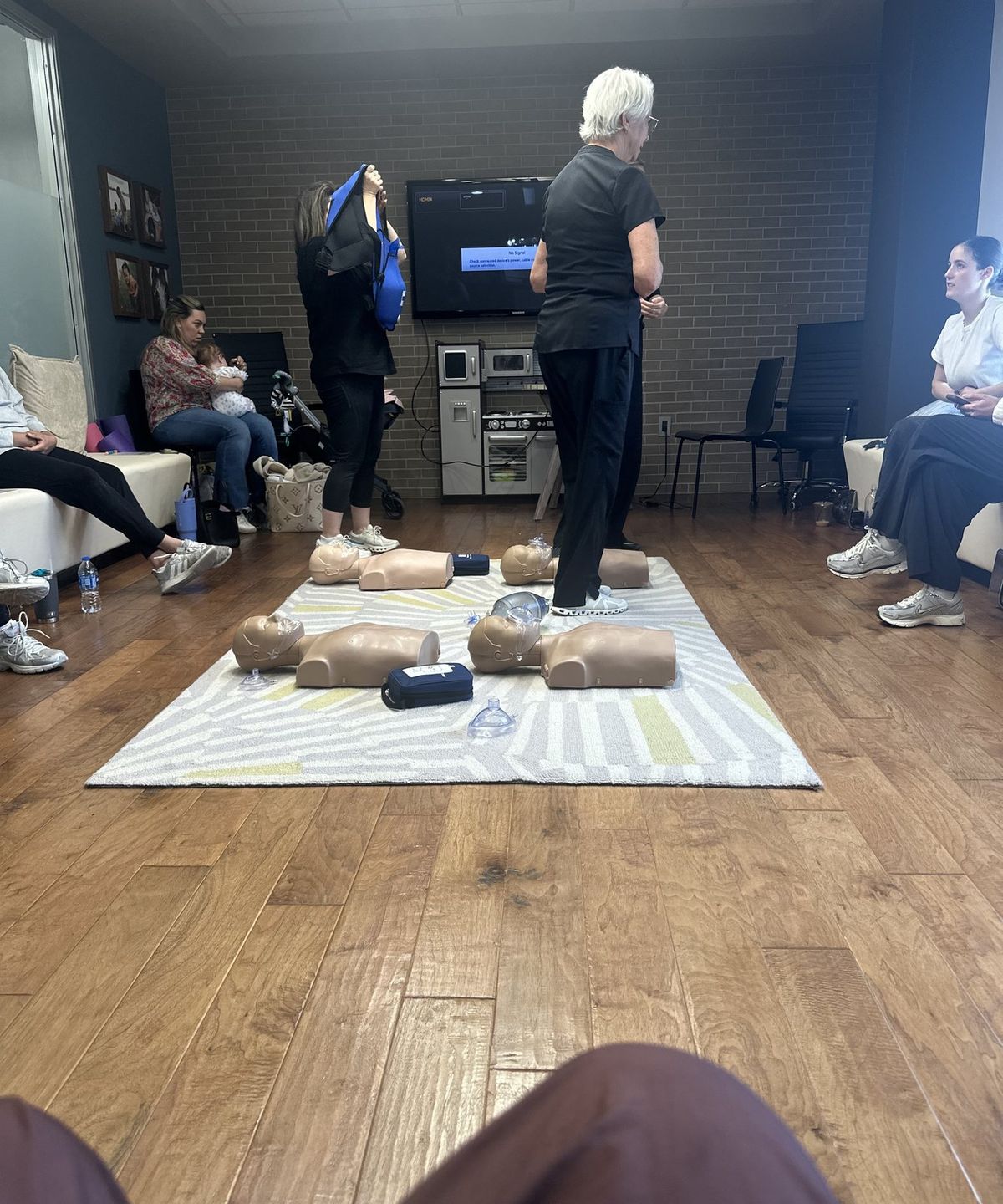
Reading gets the sequence into your head. It does not get it into your hands.
Every person in the room does every skill with their own hands, on a manikin, with a nurse watching and correcting. That correction is the part you cannot get from a page.
Technique questions
How deep should infant chest compressions be?
About 1.5 inches, which is roughly one third of the depth of the chest. That is deeper than most people expect and it is the single most common thing instructors have to correct.
Is the two finger technique still recommended for infants?
No. The 2025 AHA and AAP guidelines moved away from the two finger technique. Rescuers are now directed to use either the two thumb encircling hands technique or the heel of one hand, depending on the size of the rescuer and the baby.
How fast should compressions be?
100 to 120 compressions per minute, the same rate as for adults.
How many breaths go with the compressions?
For a single rescuer, two breaths after every 30 compressions.
The next thing worth knowing.
What to do when a baby is choking
Read thisChoosingWhich CPR certification do you actually need?
Read thisTimingWhen should parents take an infant CPR class?
Read thisReading is not training. When you want the hands on version, Pam teaches it in your own living room. See CPR parties, or call or text Pam at 317-820-8003.