 Tiny Hearts CPR
Learn to save your baby's life in your own living room.
Pam Goldsberry brings hands on infant and child CPR to your home, for you and up to ten of the people who hold your baby. Two hours, real practice, no test and no lecture.

- Pam Goldsberry, RN
- 25+ years labor and delivery
- AHA and Red Cross certified instructor
- Indiana RN license 28206515A
What is a CPR party, actually?
It is the thing most parents mean to get around to and never do, turned into an evening they will actually enjoy.
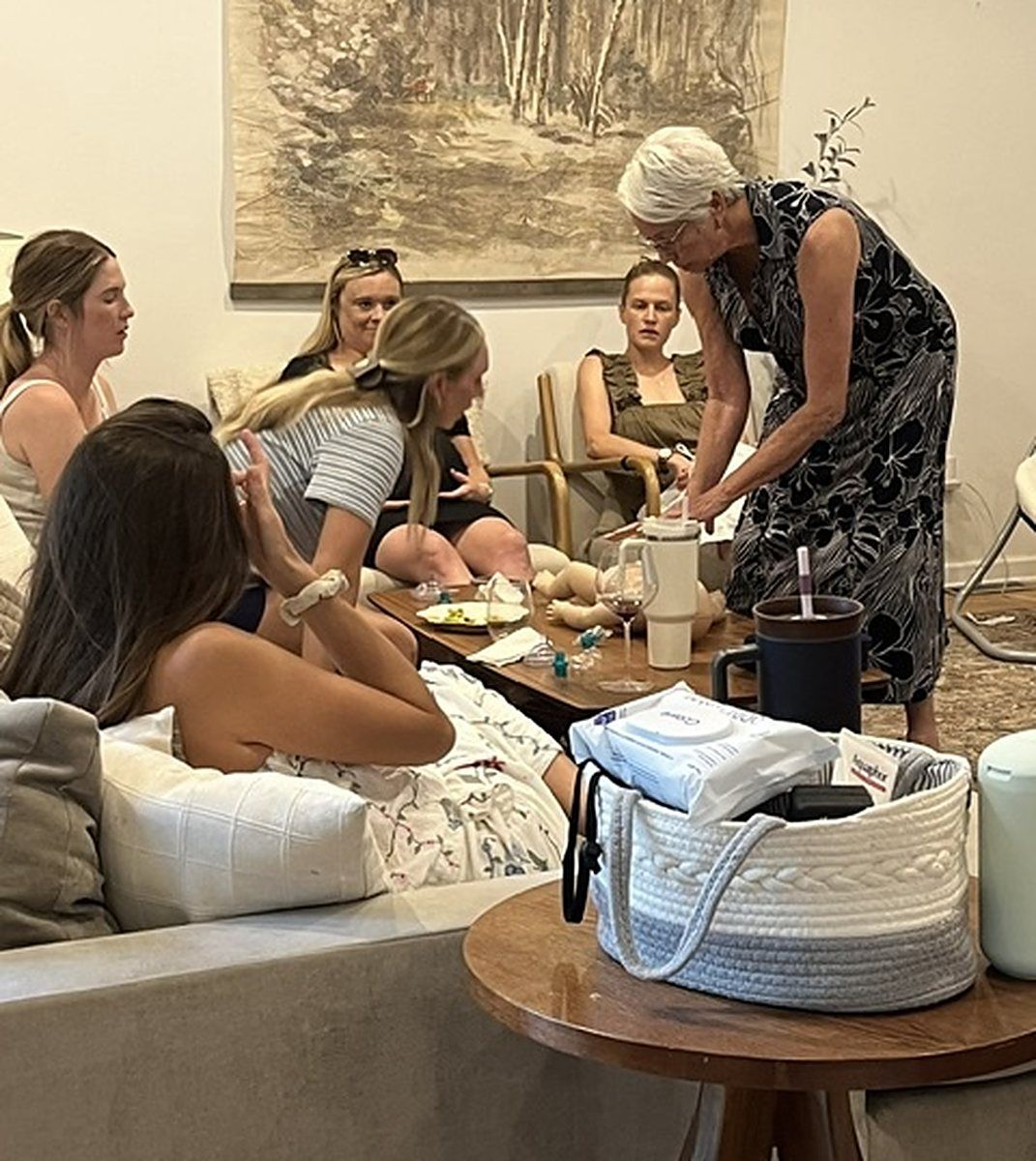
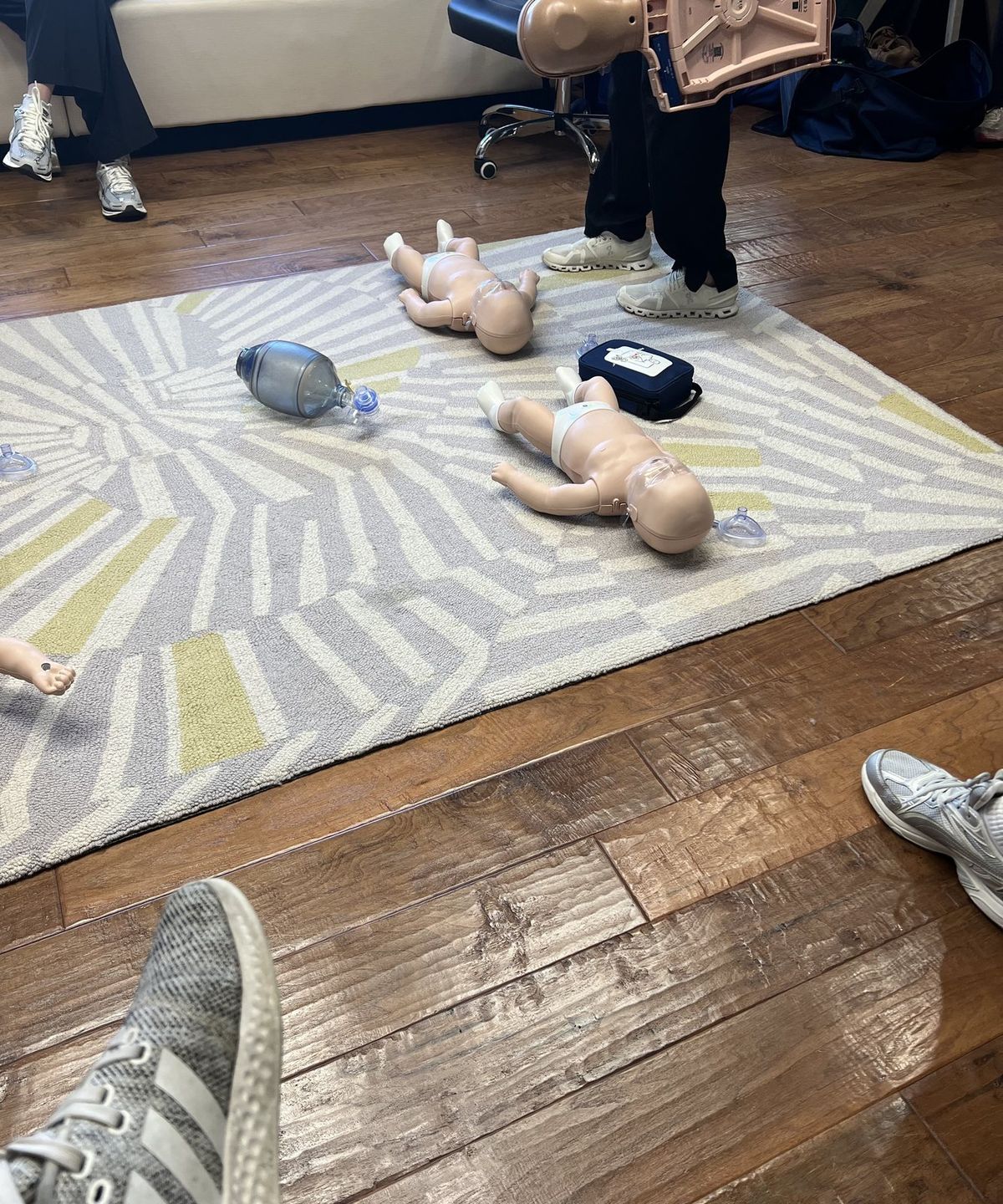
A private, in home CPR class for up to ten people. Pam arrives with the manikins and the American Heart Association Family and Friends curriculum, and for about two hours everyone in the room practices infant and child CPR, choking relief and rescue breathing on the floor of your living room.
There is no written test and no certification card. The point is not paperwork. The point is that the people who hold your baby, your mother, your sister, your best friend, your nanny, all know what to do before the night they need to.
You host
Up to ten guests in your own home. Your couch, your snacks, your people.
Pam arrives
She brings every manikin, all the materials and the full AHA curriculum with her.
Everyone practices
Infant and child CPR, choking relief, rescue breathing and when to call 911.
You leave ready
No written test and no pressure. Just hands that know what to do.
Two hours, on the floor, in a room like yours.
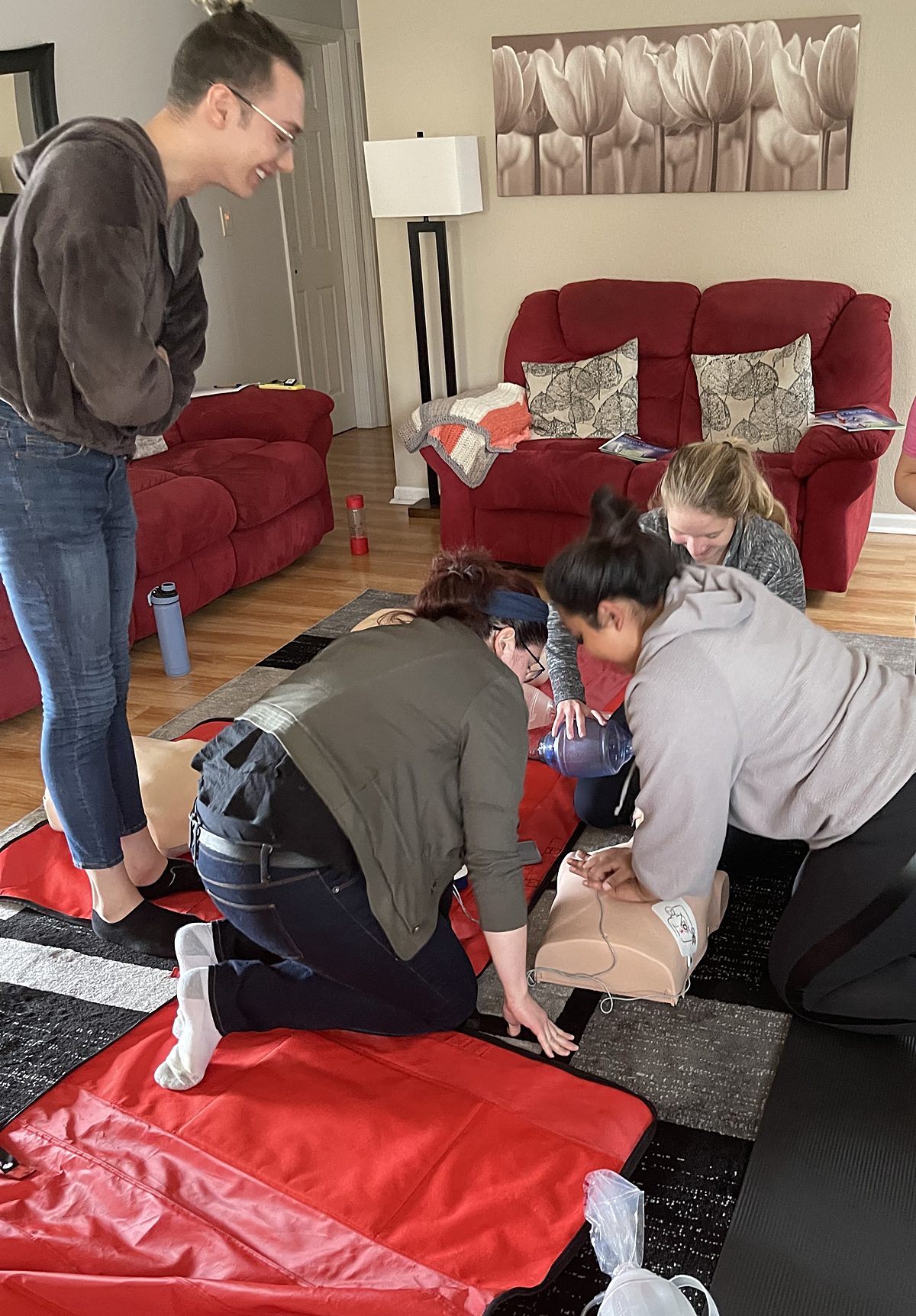
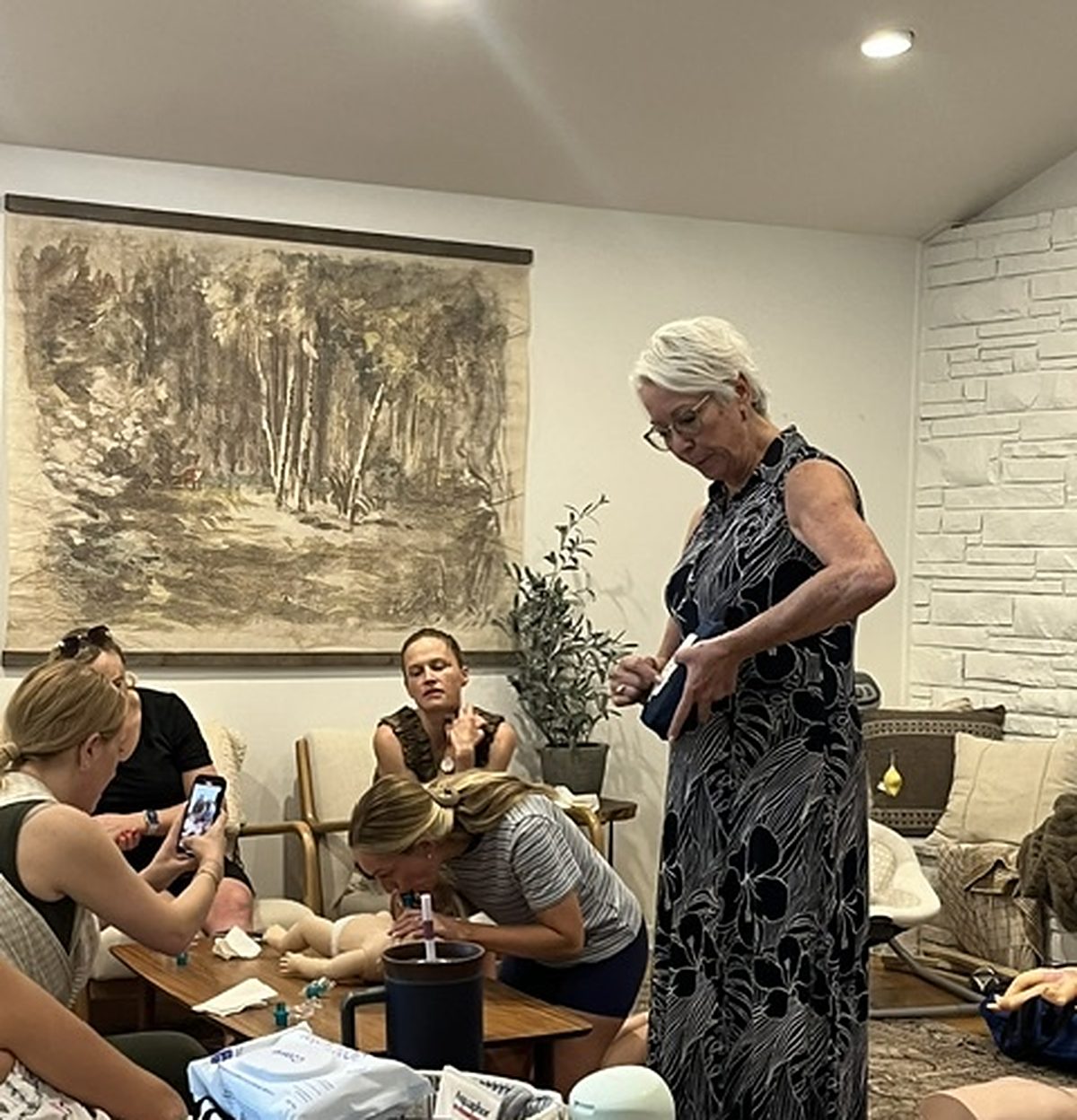
Every photograph on this site is one of Pam's own classes: real living rooms, real daycares, real people who booked her. Nothing here is stock photography.
A nurse who has actually done this in real life.
Twenty five years in labor and delivery, and one afternoon at a gas station that she still talks about.
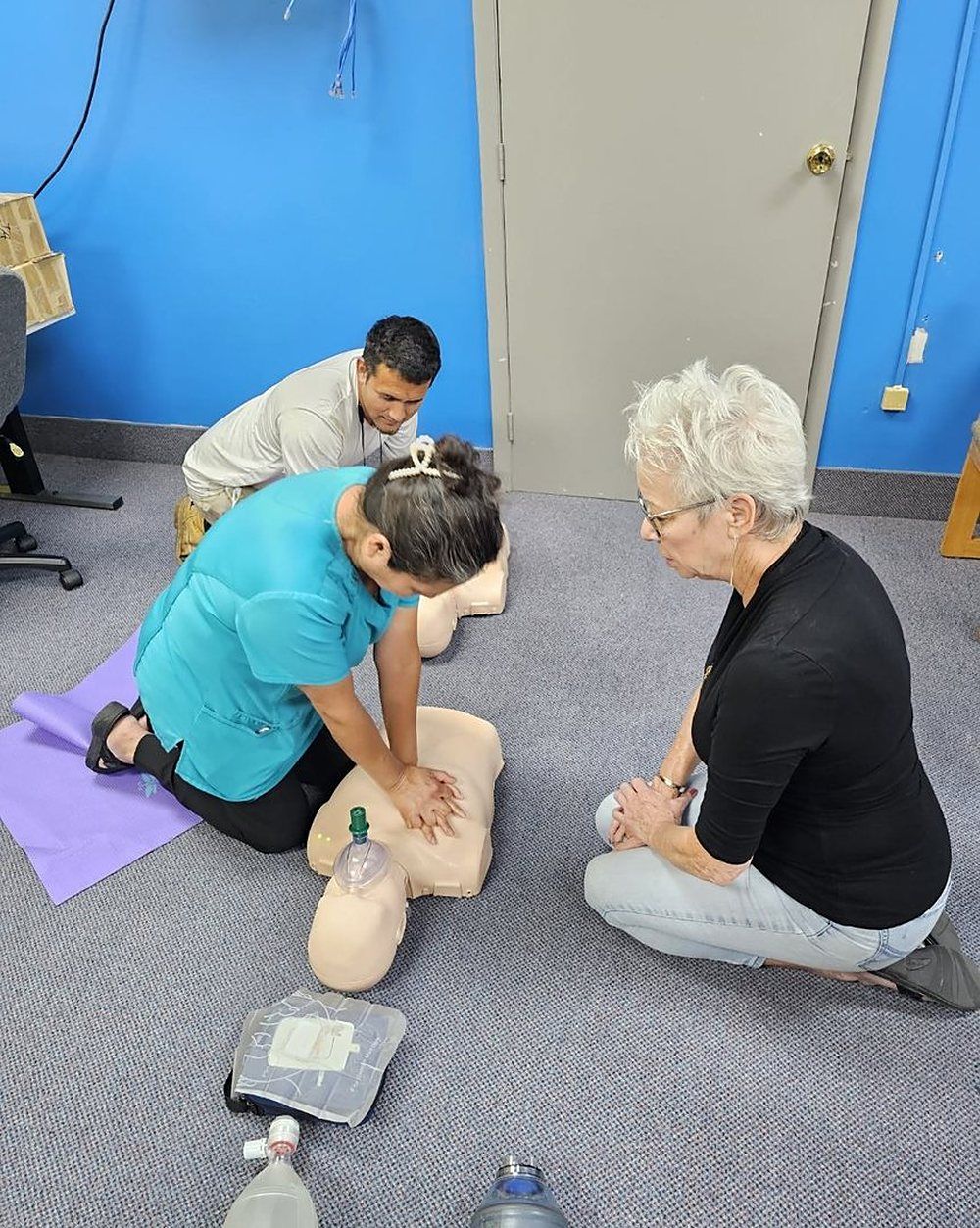
Pam Goldsberry has spent more than twenty five years as a registered nurse, most of it in labor and delivery. She has started newborn hearts in the delivery room. She has performed CPR on a stranger in a real emergency, outside a hospital, with no crash cart and no team.
She is certified as a CPR instructor through both the American Heart Association and the American Red Cross. She built Tiny Hearts CPR because she kept meeting parents who had been handed a baby and no training, and she was tired of watching people feel helpless about something that can be taught in an afternoon.
The difference between an instructor and someone who has done it
Most CPR classes in Indianapolis are taught by certified instructors at training centers. That is a perfectly good way to get a card. It is a different thing from being taught by someone whose actual job was keeping newborns alive.
Labor and delivery is one of the few places in a hospital where a patient can go from completely well to needing resuscitation inside a minute, and where the patient weighs seven pounds. Pam has spent twenty five years there. She has started newborn hearts. She knows what a baby in trouble looks like before a monitor says so, and she knows exactly how much force a small chest actually takes.
Almost everyone's instinct is to be gentle. Gentle compressions move no blood. That correction is the single most valuable thing that happens in the room.Why hands on practice is not optional
What two hours actually covers
The curriculum is the American Heart Association Family and Friends program, and everyone does every skill with their own hands rather than watching a demonstration.
- Infant CPR. Compressions to a real depth, roughly 1.5 inches, at 100 to 120 a minute, with two breaths after every 30. The 2025 guidelines also retired the two finger technique, which is covered in what changed in 2025.
- Child CPR. What changes as they grow, and how hard is genuinely hard enough on a bigger body.
- Choking relief. Five back blows then five chest thrusts for a baby, and five back blows then five abdominal thrusts for a child, which is the sequence the 2025 guidelines changed. Plus how to tell a blocked airway from a noisy one. Detail in what to do when a baby is choking.
- Rescue breathing. How little air a baby's lungs actually need, which is the other thing nearly everyone gets wrong.
- The 911 call. Who dials while you compress, what to tell the dispatcher, and what to do with the other children in the house.
Who is actually in the room
The person who ends up performing CPR on a child is very often not the parent. It is the grandparent who has them on Tuesdays, the babysitter on date night, the aunt watching them for twenty minutes at a family dinner. That is why the class seats ten rather than two, and why the price is for the party rather than per head.
It is also why grandparents matter disproportionately. Anyone trained more than a few years ago learned a technique that current guidance has moved away from, and they usually have no idea.
What it is not
It is not a certification class and it produces no card. If someone needs documentation for an employer, a school district or a licensing board, that is Heartsaver, or BLS for clinical staff. Plenty of families book both. Pam does not teach ACLS, PALS or NRP and will tell you so rather than take the booking.
Not a long, boring class.
That phrase turns up again and again in her reviews, unprompted, in different people's words. It is the whole design of the thing.
Wonderful class. Pam is so knowledgeable, patient, and gets right to the point. This is NOT a long, boring class like other CPR classes. I highly recommend taking this class. CPR is something that everyone should know.
Pam has a unique gifting to take a really big and often scary topic of adult and child CPR and make it both engaging and simple to understand. I feel more and more equipped each time I complete her course.
We have used Pam for the last four years for our BLS training. Her communication and lessons are so good. I highly recommend doing her class.
The answers, before you need them.
Properly sourced guides on compression depth, choking, certification and Indiana's Good Samaritan law, every clinical claim cited to the American Heart Association, the American Academy of Pediatrics or Indiana statute. Written to be useful whether or not you ever book a class.
Infant CPR depth, rate, and what changed in 2025
The guidelines retired the two finger technique. If you trained before 2025, your hand position is out of date.
Read this ChokingWhat to do when a baby is choking
Noise means the airway is open. Silence is the emergency. The full back blow and chest thrust sequence.
Read this For directorsIndiana daycare CPR requirements
Adult, child and infant plus AED and First Aid, with a hands on skills check. Online only certificates do not satisfy it.
Read thisShe comes to you, and the price does not move.
Her base is on Fall Creek Road at the Geist end of the city, on the Hamilton County line, and she travels well past it. The $595 covers the room, not the mileage.
CPR classes in Fishers
Her closest market, and the easiest place to get a weeknight class on the calendar.
See Fishers About 20 minutesCPR classes in Carmel
Frequently booked as a baby shower alternative, with the cost split across the group.
See Carmel Minutes awayCPR classes in Geist
Her own neighborhood, where short notice is sometimes genuinely possible.
See GeistFurther out, she teaches in New Palestine, Greenfield, Shelbyville and Greenwood, along with Noblesville, Westfield, Broad Ripple, McCordsville and Fortville and Zionsville.
Empowering families with lifesaving skills, confidence in emergencies and faith over fear.
“For God has not given us a spirit of fear, but of power, love and a sound mind.”
2 Timothy 1:7Questions people ask before they book
How much does a CPR party cost?
A CPR party is $595 for up to ten guests. That is the whole price, for the whole group, including every manikin and all materials. Certification classes are priced per person instead, starting at $88 for a blended learning skills check. All of it is listed on the classes and pricing page.
Do I get a certification card from a CPR party?
No. The CPR party uses the American Heart Association Family and Friends curriculum, which is designed to teach the skill rather than to certify you. If you need a card for work, school or licensing, book Heartsaver or BLS instead. Both issue same day cards.
How many people can come?
Up to ten. That number is not arbitrary. Past ten, people start taking turns watching instead of practicing, and watching is not what makes the skill stick. If your group is larger, ask about custom group training.
What if I do it wrong and hurt the baby?
Pam hears this at nearly every class, and her answer is blunt. Injured is better than dead. A child who is not breathing is already in the worst case. Broken ribs heal. Doing nothing is the only outcome that cannot be undone, and it is the one people choose when nobody has ever shown them what to do.
Could I be sued for helping someone?
This is what the Indiana Good Samaritan law exists for. It protects people who step in and act in good faith during an emergency. We cover it properly in can you be sued for doing CPR in Indiana, and Pam covers the practical version in class, including when to stop and what to tell the 911 dispatcher.
Where do you teach?
Your home, mostly. Pam travels across Indianapolis and well beyond it, from Hamilton County down through Hancock, Shelby and Johnson Counties, and she brings everything with her. She also teaches at churches, preschools, daycares and offices. If you are wondering whether you are too far out, the answer is almost certainly no. Ask her.
Tell Pam roughly when, and how many.
She answers every message herself, usually the same day. If you already know your date, say so. If you are still at the thinking about it stage, that is fine too.
Give your village the gift of confidence.
Call, text or send the form. Pam answers every message herself, usually the same day. Tell her roughly when and how many, and she will take it from there.