 Tiny Hearts CPR
Bring your village. Pam brings everything else.
A private, in home infant and child CPR class for up to ten guests. $595 for the whole group, about two hours, anywhere in Indianapolis and the surrounding areas.
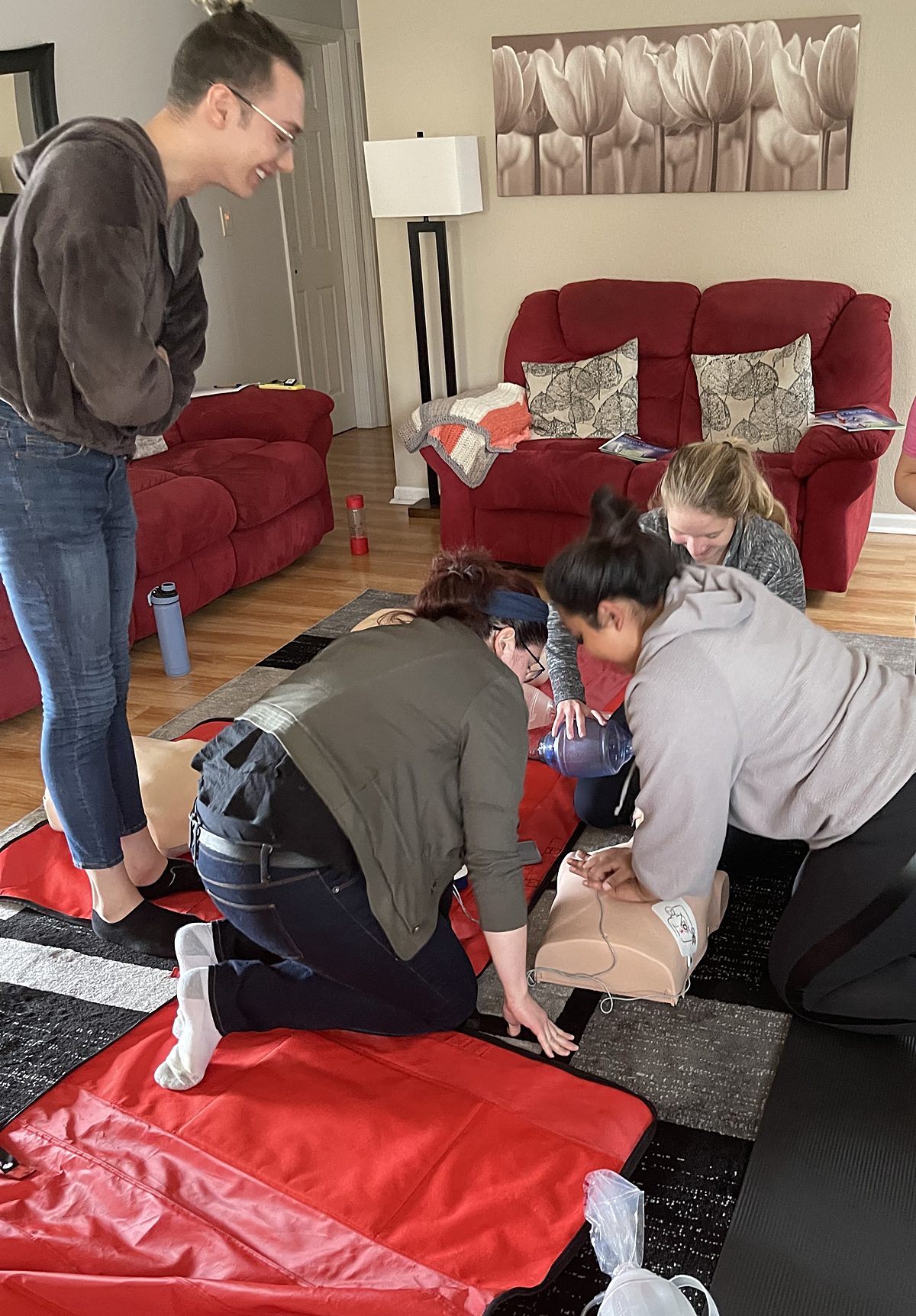
A CPR party is a private CPR class held in your own home for up to ten people, for $595 total. Pam Goldsberry, a registered nurse with more than twenty five years in labor and delivery, brings the manikins and teaches the American Heart Association Family and Friends curriculum. Everyone practices infant and child CPR, choking relief and rescue breathing. It takes about two hours. There is no written test and no certification card.
Why teach CPR at home instead of in a classroom?
Because that is where it happens. Almost every pediatric emergency a parent will ever face happens somewhere ordinary, on a rug, in a high chair, at the side of a bath. Learning the skill in the same kind of room where you would have to use it does something a conference table cannot.
There is also a practical reason. New parents do not go to classes. Between feeding schedules, nap windows and the general chaos of a house with a baby in it, the drive to a hospital seminar is the thing that gets canceled. Pam removed the drive.
What will we actually learn?
The class follows the American Heart Association Family and Friends curriculum, and everybody in the room does every skill with their own hands. That covers infant CPR, child CPR, what changes between the two, choking relief for a baby and for a child, rescue breathing, and how to recognize the difference between a blocked airway and a quiet one.
It also covers the part people forget to teach. Who calls 911 while you are doing compressions. What to say when the dispatcher picks up. What to do with the other children in the house. Where to put the baby down. These are the decisions that fall apart under adrenaline, and they are worth rehearsing.
Who should be in the room?
The people who hold your baby when you are not there. That is usually a wider circle than parents expect. Grandparents look after the baby on Tuesdays. A sister babysits on date night. A nanny has the child forty hours a week. An older cousin is trusted for twenty minutes at a family party. Any of them could be the only adult present, and any of them can learn this.
Ten is the cap, and it is a deliberate one. Beyond ten, the class stops being hands on and starts being a demonstration people watch. Watching does not build the reflex. If your group is bigger than ten, look at custom group training instead, which is built for larger rooms.
What people ask before they book
Free, properly sourced guides on all of this sit in the parent resources, written to be useful whether or not you ever book. Two questions come up in almost every class. The first is what happens if you injure the child, and the answer does not soften: injured is better than dead. The second is whether you can be sued for stepping in, which is what the Indiana Good Samaritan law exists to prevent. Both get answered honestly in the room rather than waved away.
People also want to know how hard is hard enough, which is the thing you cannot learn from reading. The depth numbers are in infant CPR depth and rate, including the technique change the 2025 guidelines brought in, but calibrating it takes a manikin and an instructor watching your hands.
Is it going to be grim?
No, and that is a deliberate choice rather than a marketing line. Fear is a bad teacher. People who are frightened during a class remember the feeling and forget the sequence. Pam runs it warm, with room for questions that feel stupid, snacks, and a round of CPR bingo near the end. The material is serious. The evening does not have to be.
What it is not
This is not a certification class and it does not produce a card. If you need documentation for an employer, a school district, a licensing board or a daycare, you want Heartsaver CPR, AED and First Aid, or BLS for Healthcare Providers if you work in medicine. Pam teaches both, and both issue same day cards. Some families book a party for the household and a Heartsaver class for the one person who needs the paperwork.
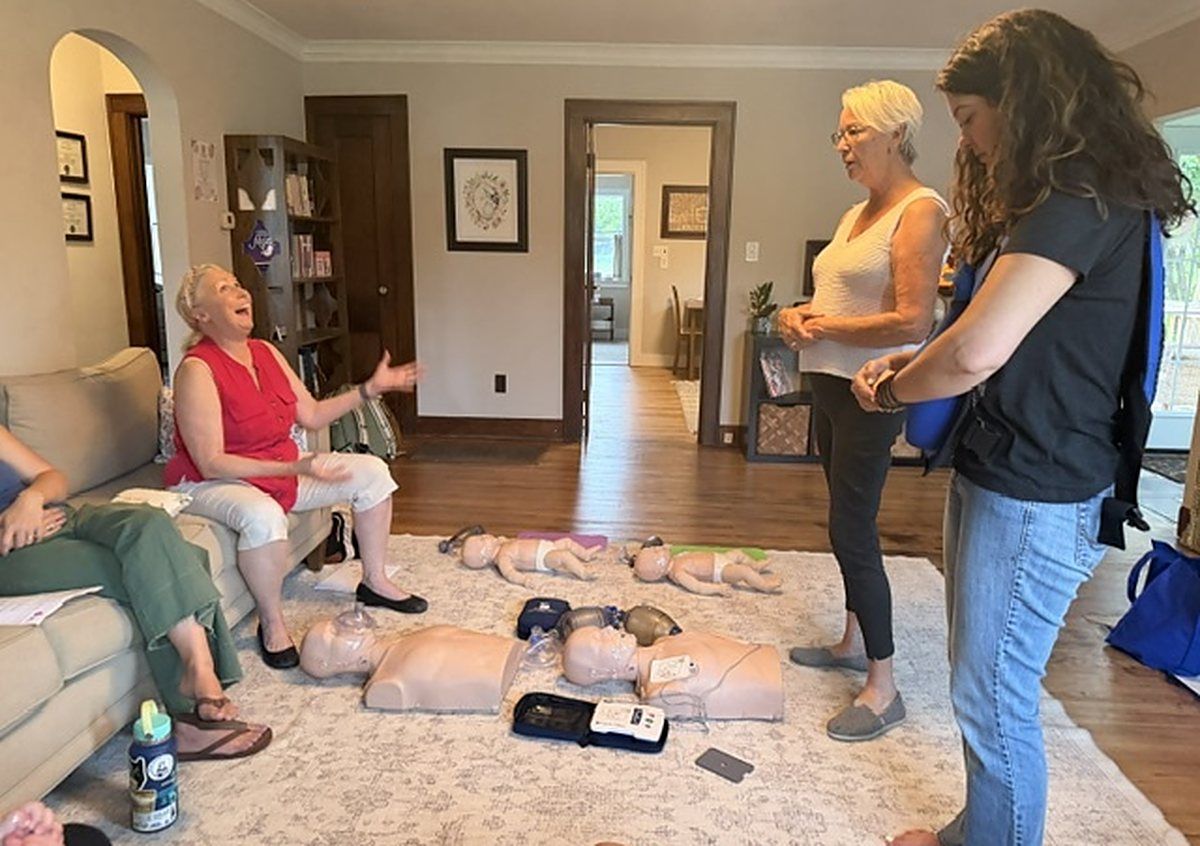
The evening is warmer than the subject.
Fear is a bad teacher. People who are frightened during a class remember the feeling and forget the sequence, so Pam runs it with room for questions that feel stupid, snacks, and a round of CPR bingo near the end.
Questions hosts ask
What does the $595 cover?
Everything. Pam's time, travel inside Indianapolis and the surrounding areas, every manikin, all the practice materials and the full American Heart Association Family and Friends curriculum for up to ten people. There is no per person charge on top and no materials fee.
Do we need to provide anything?
Floor space and people. Most hosts put out snacks and drinks because it turns into a social evening, but nothing about the class requires it. You do not need to buy or rent equipment.
How long does it take?
About two hours. That includes hands on practice for every person in the room, question time, and Pam's CPR bingo, which exists because people remember things they laughed about.
Is this a certification class?
No. Family and Friends is a skills class, not a certification course, so there is no card at the end. If someone in your group needs a card for work, book Heartsaver or BLS.
How do I pay for a party?
Venmo, or by card through Square. Pam sends the details once your date is confirmed. The $595 is for the room rather than per person, so it does not change if two more people turn up.
Can grandparents and babysitters come?
They are exactly who should come. The person most likely to be alone with your baby in an emergency is often not you. Nannies, grandparents, older siblings and close friends all count toward your ten.
Book your CPR party.
Tell Pam roughly when you are hoping for and how many people you expect. She will confirm availability, usually the same day.
Give your village the gift of confidence.
Call, text or send the form. Pam answers every message herself, usually the same day. Tell her roughly when and how many, and she will take it from there.